
By StJohn Deakins
StJohn coined the term ‘omnichannel’ in 2000, while at Agency.com consulting to T-Mobile UK.
What if every “hyper-personalised” experience your brand has ever delivered was aimed at a ghost?
Thirty years ago, omnichannel was conceived as the path to genuine one-to-one personalisation: the brand travelling alongside the customer across every channel, real and digital. Three decades later, the destination on that original map, hyper-personalisation, is overdue for an evolution.
From omnichannel to signal-harvesting
Today’s omnichannel stack is a signal-harvesting exercise. Every touchpoint instrumented, every interaction logged, every fragment piped into a warehouse so a model can try to reconstruct who the customer might be from the patchwork. That is not personalisation, it’s forensic reconstruction, and it produces exactly what forensic reconstruction always produces: a rough chalk outline.

The hyper-personalisation chalk outline
The industry sold hyper-personalisation on the promise of a living digital twin. What brands actually received is much thinner:
- Transactional history (what happened, not why)
- Clickstream residue, and the endless last-click attribution debate
- Third-party inferences (enrichment bought from brokers, mostly obsolete, often wrong)
- Model-generated lookalikes (guesses about guesses)
None of this touches the 95% of life that happens off the brand’s rails. Professor John Dawes’s 95:5 Rule reminds us that at any moment, only 5% of customers are in-market. Centralised systems treat the other 95% as stale data points rather than people with lives happening elsewhere, and the longer the chalk outline gets traced over, the more distorted the person inside it becomes.
Why the twin cannot live on a server
There are four structural reasons the server-side approach can never catch up.
1. Latency of life. Context changes faster than any pipeline can ingest it. Calendar, location, mood, who the customer just spoke to, what they just searched on another app: all missing or, at best, stale by the time they reach the warehouse.
2. Fragmentation by design. Apple and Google have closed the tracking loopholes. The data broker economy is shrinking. Regulators are fining the honeypots. The server will see less tomorrow than it sees today.
3. The creep-out paradox. The moment personalisation feels accurate, it feels invasive, and brands hide the mechanism rather than surface it.
4. The agent intermediation problem. When customer agents on behalf of customers, they sit between the brand and the customer. Server-side personalisation loses signal. Without a presence in the customer’s lived context, on the device, the brand has no way to influence the agent’s next move.
Hyper-personalisation is not one pipeline fix away. The centralised architecture is the problem.
The richest context was never going to be on a server
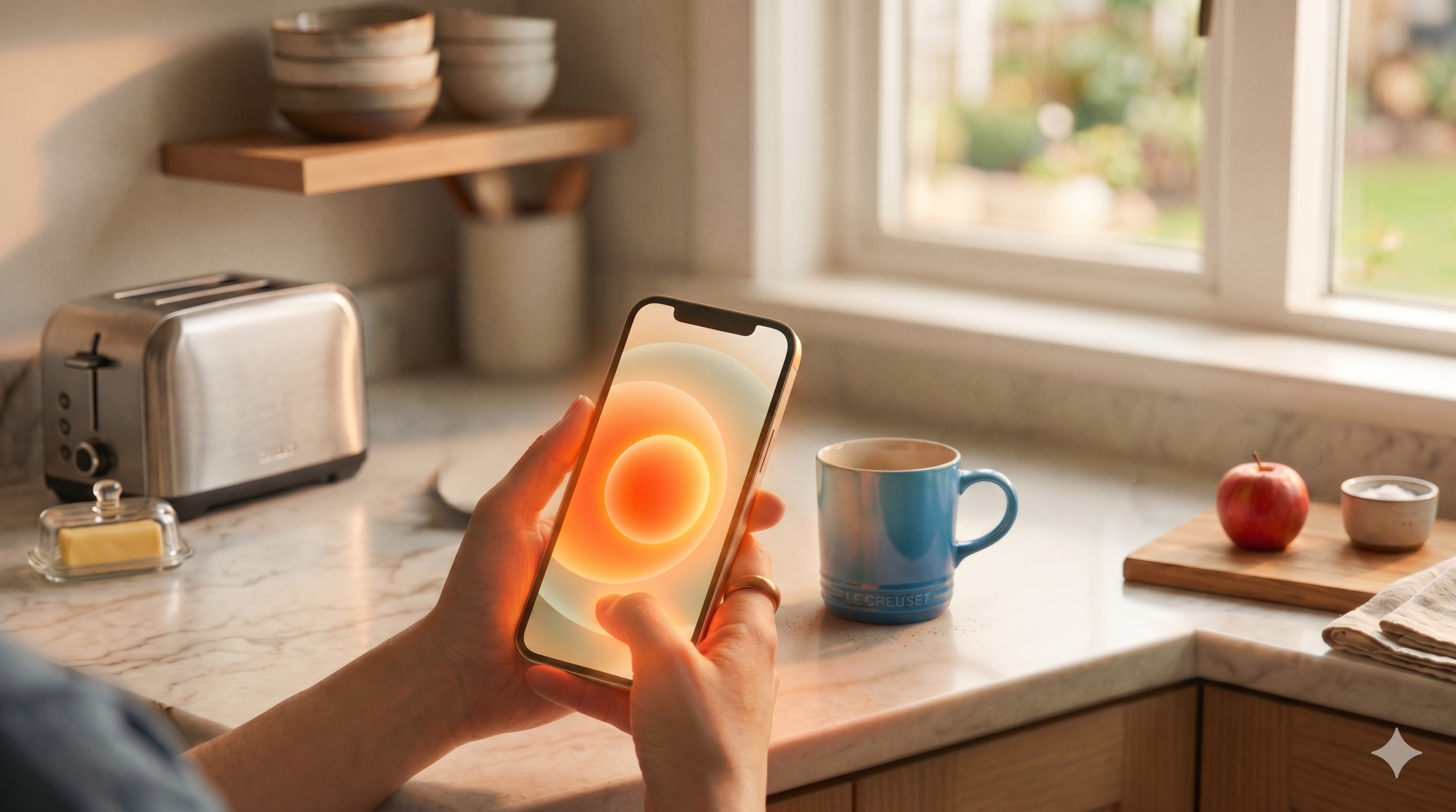
Here is the line that reframes everything. The richest life context will never live on a server. It is at its richest on our mobile phones.
The phone already holds what the warehouse spends millions trying to approximate: Calendar. Location. Photos. Health signals. App usage. Messages. Socials, Movies, Music. Purchases across every brand the customer touches. All of it continuously updated in the person’s own domain. No pipeline to build, no consent burden to manage, no central store to defend. This is not a dataset that can be extracted. It is a context that exists in only one place, and only ever will. Your customers’ lives are on the edge.
So maybe we should stop trying to drag a thinner and thinner shadow of the customer into the cloud. And instead move the intelligence to where the richest context lives.
This is the shift DataSapien enables with the Device Native AI Platform. A three-tier intelligence stack of deterministic rules, classic ML, and generative small language models, running inside the brand’s existing app, on the customer’s own device. Context stays private. The customer decides what to share back, and when.

OmniPersonal Marketing: the evolution omnichannel was always heading towards
When intelligence runs on-device, segmentation stops being a guess made on stale data in a warehouse and becomes a real-time match made against the customer’s live context, on their device, with their consent. The customer is no longer a row being scored. They are a co-designer of their own journey, sharing zero-party data and insights back to the brand with intent.
The architectural shift is more elegant than it first sounds. With the SDK in place, each customer app becomes a node in the organisation’s customer neural net, working in harmony with, and extending, the existing customer tech stack. The CDP, the campaign tools, the analytics layer, the loyalty engine all keep their jobs. They get fed better, more honest signals from a smaller surface area of risk. This is the missing element, not a replacement for what brands have already built. The path from omnichannel to OmniPersonal is an evolution, not a rip-and-replace.
This is OmniPersonal Marketing. Not hyper (excess, instability, lack of control), but omni (everywhere the customer is, on their terms). It is what omnichannel was always pointing at, finally architected the right way round.
The 44X engagement uplift comes from reaching the 5% who are actually in-market, with context only the customer and their device know, at the moment they are ready to act. The full derivation, drawn from Dawes’s 95:5 Rule and the De Haan, Wiesel and Pauwels conversion research, is set out here. It is a theoretical ceiling, not a deployment number, and worth understanding on those terms.
A wider scope of permission
This is the path to relevance in an age of Agentic AI. If brands don’t have a presence on the customer’s device, the agent layer (owned by OpenAI, Google, Apple) will sit between them and the customer, intermediating the relationship and owning the context. The brands that survive that shift will be the ones the customer has already invited deeper in. Domain super apps are how that invitation gets accepted at scale.
In an AI and Agent world, context is king. Brands uniquely own deep domain context – what they know about their category and their craft. The other half of the equation, customer context, only opens up when the relationship has earned it.
When customers co-design their own journey and trust the intelligence in their pocket, they grant the brand a wider scope of permission. The jobs they invite the brand into get bigger. A nutrition provider becomes a nutrition coach. A travel booker becomes a proactive travel agent. A financial service provider becomes a financial advisor.
None of these expansions are possible when the relationship is built on signal-harvesting and detached inference. They are only possible when the customer can see what the brand is doing for them, control what is shared, and choose to grant more access because the value keeps showing up. It is the accumulating right to be useful in more of the customer’s life. This permitted intimacy is what unlocks territory the brand could never have asked for cold.
The personalisation that finally becomes personal
Omnichannel was the right idea, three decades early. Hyper-personalisation is the wrong implementation of a good instinct. The richest context was never going to live on your server. It lives close to the customer, on their phone, in the hands of the person you are trying to serve.
This doesn’t start with a platform decision. It starts with a single customer journey, in the app you already have, where the value of moving intelligence onto the device is most obvious to your customer and easiest to measure for your team. The customer neural net builds one node at a time.
OmniPersonal Marketing moves the intelligence to where the context is, and invites the customer to participate. This is when personalisation finally becomes – personal.