
Tomorrow Apple will take the stage and make on-device AI look inevitable. New iPhones, iOS 27, and a rebuilt Siri that can reason and act across your apps. Watch it. Apple always puts on a good show, and they’re right.
For years we have argued that personal intelligence belongs on the device, close to the rich context of a person’s actual life, not as shards in a distant cloud. Tomorrow that argument becomes Apple’s headline. The model moves to the phone. The assistant becomes agentic. Context, not data, becomes the thing that matters. If you have been waiting for permission to take on-device AI seriously, a trillion dollar company is about to grant it.
This is good news, and every consumer business should welcome it. It also leaves one question unanswered, and it is the one that matters most to you.
Apple builds the rails. It does not build your relationship.
Apple is handing the whole industry a gift: on-device foundation models, a powerful general assistant, App Intents so your app can expose what it does, and silicon fast enough to run real intelligence in a person’s pocket. Google is doing the same on Android. These are the rails, and they are excellent.
They will also do something no marketing budget can. They put a capable AI into the hands of every phone user, bundled with the device, at no extra cost. Tomorrow is not simply a product launch. It is the moment consumer AI stops being something people choose to try and starts being something they already have. Adoption will not be gradual.
What the mobile platforms will not do is own your customer relationship for you. That is not their business. Apple sells devices and privacy. Google sells reach. Neither one sells your domain expertise or your judgement about how to look after your customer in the moment-that-matters. That layer, the relationship and the experience and the brand, is the one thing they leave to you.
Which is why the question for tomorrow is not: “how good is Siri?”
It is: “whose agent is looking after my customer, and on whose terms?”
The winning move is Apple, and…
The brands that win this shift will not treat Siri as a rival, and they will not simply hand their app over as a set of actions for someone else’s assistant to call. They will build on the rails, and add their own layer on top.
In practice that means running your own agent inside your own app. Not a wrapper around a general assistant, but your own model, trained on your own business, running on the customer’s device, on both Apple and Android. You own the harness. You design the experiences. Your agent works alongside Siri and Gemini rather than instead of them, and the relationship stays yours.
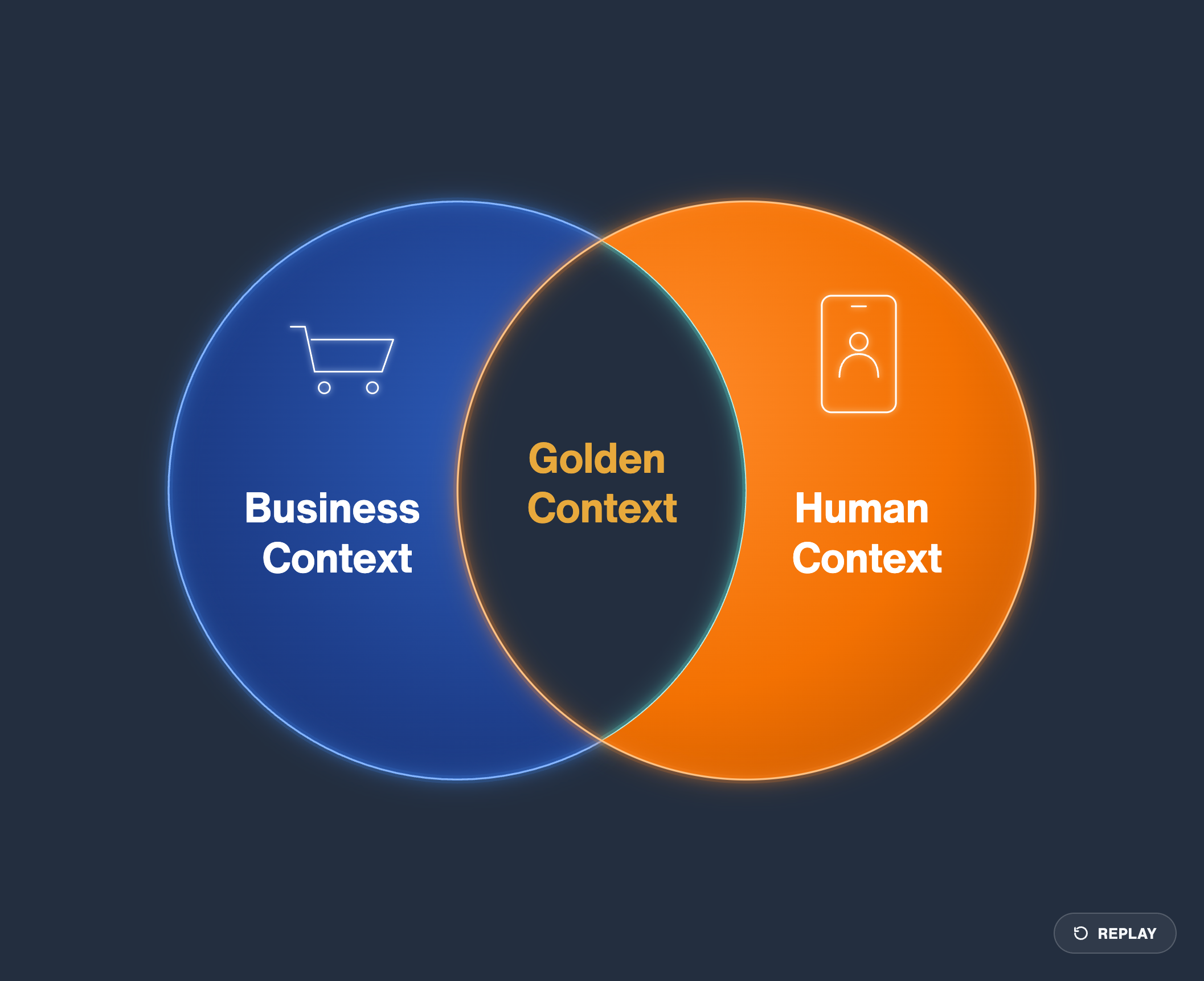
You also already hold the half the platforms have to guess at. Apple and Google can see the phone. You can see the customer: their account, their history with you, what you have promised them, and what you owe them next. Join that business context with the customer’s live human context on the device, where it stays private, and you have the agent your customer actually wants. Theirs, and yours. Not a stranger guessing at their life.

On-device is about to become table stakes.
Table stakes have a catch. Once everyone has them, they stop being a differentiator. After tomorrow, “we work with on-device AI” will be true of every app on the store. Note the verb. Working with Apple’s AI, or Google’s, is not the same as running your own, and on its own it will win you nothing.
What will differentiate is ownership. Whether the agent looking after your customer is yours or borrowed. Whether the experience is designed by you or inherited from a platform. Whether, when the customer turns to an assistant to get something done, the brand they have a relationship with is present and useful, or absent while someone else’s AI handles the moment and keeps the margin.
Three futures
There are three futures here, and every consumer business will end up in one of them.
Lose the relationship. Your customer’s needs get handled by Big AI: ChatGPT, Claude, Gemini. They hold the conversation, guess at the life, and keep the margin. You become a supplier they source from.
Rent the relationship. You go along with the platform assistant. Siri or Gemini knows the customer, calls your app when it needs something, and passes back what it chooses to. The relationship is real, but it is leased, and the terms are not yours.
Own the relationship. You harness your own business context together with your customer’s live human context, on their device, using everything Apple and Google have just given you. Your model, your harness, your experiences, on both platforms. The relationship compounds every time you serve the customer well, and it stays yours.
Same technology. Same market. Same rails. The only question is whose agent wins.

Watch the keynote. Then ask the question.
So watch tomorrow, and enjoy it; Apple always puts on a good show. It’ll be good news, and it is good for every brand that gets this right. Then ask yourself the one thing Apple will not put on a slide: whose agent is looking after your customer?
We know our answer. It should be yours.
If you’d like to talk about what a brand-owned agent looks like on your own app, on both Apple and Android, that is exactly what we build at DataSapien.